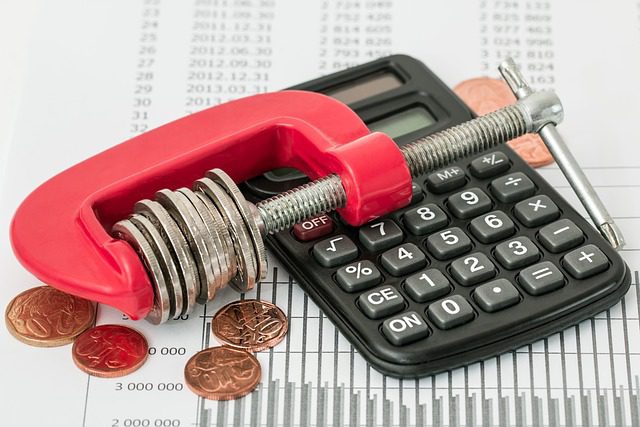
When you invest money, the most important question is: how much will it grow? Whether you are saving for retirement, building a college fund, or growing your wealth, understanding investment returns helps you make informed decisions. The Investment Returns Calculator at Today Calculator lets you quickly project how your money grows over time with different contribution strategies.
Use our Investment Returns Calculator to crunch the numbers and see your potential growth instantly.
What Are Investment Returns?
Investment returns are the profit (or loss) you earn on your invested money, expressed as a percentage of your initial investment. Returns come from two sources:
- Capital appreciation: The value of your investments goes up (e.g., stock prices rise)
- Income: Dividends from stocks, interest from bonds, or rental income from real estate
How to Calculate Investment Returns
The simplest way to calculate returns is the Total Return formula:
Total Return (%) = [(Final Value – Initial Investment) / Initial Investment] × 100
However, most investments span multiple years with additional contributions. That is where the compound annual growth rate (CAGR) and the future value formula come in, both of which are built into our calculator.
Key Factors That Affect Your Returns
| Factor | Impact on Returns | Example |
|---|---|---|
| Initial Investment | Larger principal = larger absolute returns | $10,000 vs $1,000 starting point |
| Annual Return Rate | The higher the rate, the faster your money compounds | 7% (S&P 500 avg) vs 3% (bonds) |
| Time Horizon | More years = more compounding cycles | 30 years vs 10 years |
| Monthly Contributions | Adding money regularly supercharges growth | $500/mo vs no contributions |
| Fees & Inflation | Reduce real (inflation-adjusted) returns | 1% fee reduces 7% return to 6% |
Real-World Example: $10,000 Over 30 Years
Let’s say you invest $10,000 today and add $500 per month. Assuming a 7% annual return (the historical average of the S&P 500):
- After 10 years: ~$105,000 (you contributed $70,000)
- After 20 years: ~$290,000 (you contributed $130,000)
- After 30 years: ~$630,000 (you contributed $190,000)
The magic is compounding: your money earns returns on previous returns. Use the Investment Returns Calculator to run your own scenario.
Common Investment Return Mistakes
- Ignoring inflation: A 7% nominal return is only ~5% real return after 2% inflation
- Chasing past performance: Last year’s top fund rarely repeats
- Not reinvesting dividends: Dividends left as cash miss out on compounding
- Forgetting fees: A 1% management fee eats 28% of your potential gains over 30 years
Visit the Investment Returns Calculator to start projecting your financial future.
Related Articles:
 Currency Exchange: How to Get the Best Exchange Rates and Avoid Hidden Fees
 BMI Calculator – How to Understand and Track Your Body Mass Index Effectively
 ROI Calculator: How to Measure Return on Investment for Any Business Decision
 How to Solve Any Quadratic Equation: The Quadratic Formula, Factoring, and Completing the Square
Leave a Reply
You must be logged in to post a comment.